
|
 |




Current news on recent developments by our team of engineers and sales.
 Justus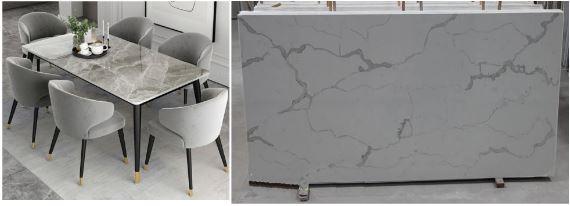
What Is Synthetic Onyx?
Synthetic polyester resin can be developed to make many everyday products. One of its most visually striking applications is the creation of onyx-style finishes: aesthetic surfaces that imitate the beauty and luxury of natural onyx stone while offering several advantages.
Synthetic onyx combines elegance with practicality, making it ideal for use in various industries - from interior design and hospitality to marine, automotive, and residential applications. These products are resistant to moisture, impact, and UV degradation, and require minimal maintenance compared with natural stone.
Advantages of Synthetic Onyx
To further understand the importance of this FRP Onyx material, the following are several of its advantages:
|
1. |
Aesthetic Appeal |
|
|
Synthetic onyx patterns can imitate the veining and depth of aesthetically appealing natural stone, creating a striking visual effect. When backlit, synthetic onyx can refract light so that the veins or natural stone patterns become more visible. This combination of beauty and functionality makes synthetic onyx a favorite in architecture, hospitality, and interior design. |
|
2. |
Corrosion Resistance |
|
|
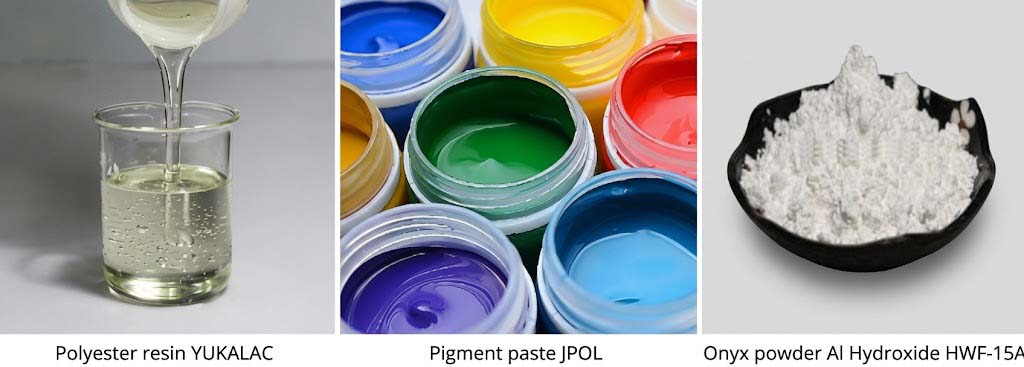
Synthetic onyx is made from a combination of polyester resin, aluminium hydroxide, and colorants, giving it resistance to rust, moisture, and chemical degradation. This makes it ideal for use in chemical laboratories at chemical processing plants, wastewater treatment facilities, and food production units. Unlike untreated metals or stone, synthetic onyx does not degrade when exposed to acids, alkalis, or salt water, helping ensure long-term performance and reduce maintenance costs in corrosive environments. |
|
3. |
Lightweight Construction |
|
|
Synthetic onyx is lighter than natural stone, concrete, or metal alternatives - often 30-50% lighter. This reduces the load on building structures and simplifies transportation and installation. Its lightweight nature also enables creative architectural applications, such as suspended panels, curved walls, dining tables, or renovation of older buildings where structural reinforcement is impractical or expensive. |
|
4. |
Impact Strength |
|
|
Synthetic onyx demonstrates high tensile and impact strength, making it highly durable in high-traffic environments or conditions where impacts frequently occur. The material resists chipping, cracking, and denting, which are common problems with natural stone or brittle plastics. This durability is especially valuable in commercial construction, transportation hubs, and industrial facilities where durability and safety are critical. |
|
5. |
Easy Maintenance |
|
|
The smooth, non-porous surface of synthetic onyx resists stains, mold, and bacterial growth and requires only routine cleaning with mild detergent. These hygienic properties make it ideal for environments with strict sanitation standards, such as hospitals, laboratories, commercial kitchens, and public restrooms. Unlike natural stone, synthetic onyx does not require sealing or waxing, thereby reducing long-term maintenance costs. |
|
6. |
Temperature Resistance |
|
|
Synthetic onyx can withstand a wide range of temperatures, typically from -40°C to more than 110°C, depending on the resin formulation. This thermal stability makes it suitable for outdoor cladding and indoor industrial applications involving heat-generating equipment. |
|
7. |
Electrical Insulation |
|
|
As a non-conductive material, synthetic onyx provides good electrical insulation, making it safe for use in electrical enclosures, control panels, switch rooms, and data centers. The material helps prevent short circuits and protects personnel from electrical hazards. This property is especially beneficial in industrial automation, power generation, and electronics manufacturing, where safety and equipment protection are critical. |
|
8. |
Design Flexibility |
|
|
One of the most attractive advantages of synthetic onyx is how easily it can be formed. The material can be molded into complex curves, intricate shapes, and custom dimensions, allowing architects and designers to realize innovative concepts that would be impossible with other materials such as natural stone. This flexibility supports applications in automotive interiors, marine cabinetry, curved wall systems, and custom architectural features, allowing seamless integration of beauty and function across various industries. |
Uses and Applications of Synthetic Onyx in Industry
Because of its properties, synthetic onyx is widely used in various industries and everyday products:
Used for interior walls, ceilings, shower enclosures, dining tables, kitchen wall cladding, hospital surfaces, and luxury retail spaces.
Used in commercial construction, transportation hubs, and industrial facilities.
Used in electrical enclosures, control panels, switch rooms, and data centers.
Used in the manufacture of automotive interiors, marine cabinetry, and other cabinets that would be impossible to produce with rigid materials.
Justus Kimiaraya: The Best Choice for Synthetic Onyx Manufacturer in Indonesia
PT Justus Kimiaraya provides quality products for the manufacturing of synthetic onyx at competitive prices. Our company has presence in major cities across Indonesia, making it easier for customers throughout Indonesia to access our products.




 Inquiry





